

NeoGraf Solutions
Graphite Thermal Solutions for Lightweight, Safer EV Batteries
NeoGraf Solutions supplies advanced flexible graphite materials that move heat fast, even in thin, lightweight formats—helping OEMs and Tier 1s tame hotspots, improve uniformity, and slow thermal propagation in EV packs. Flagship eGraf® SpreaderShield™ heat spreaders replace thicker aluminum fins to cut mass and channel heat efficiently to cold plates during charge/discharge.
With more than a century of graphite innovation, NeoGraf’s portfolio spans heat spreaders, TIMs, thick graphite laminates, fire-protection additives, and high-temperature seals—building blocks that drop into today’s battery modules and pack architectures.
Key Technologies Supporting EV Battery Systems:
SpreaderShield™ Flexible Graphite Heat Spreaders
Thin, die-cuttable heat spreaders that replace aluminum cooling fins to reduce pack weight by ~20–40 kg per vehicle, lower hotspot temperatures, and help limit cell-to-cell propagation by routing heat to the cold plate.
HiTherm™ Graphite TIMs
Compliant, sheet-based thermal interface materials that drive out interfacial air gaps and cut contact resistance; through-plane conductivity up to ~10–16 W/m·K with very high in-plane conduction for lateral spreading—ideal under baseplates and busbars.
NeoNxGen™ Thick Flexible Graphite
Single-layer, high-performance graphite (UL 94 V-0) for “thick” heat paths, shields, and fin geometries where multiple layers were once required—simplifying assembly while sustaining ~900–1100 W/m·K in-plane conduction.
GrafGuard® Expandable Graphite (Fire Protection)
Non-halogenated, intumescent graphite additive for foams, coatings, and barrier walls that forms a char layer, absorbs heat, and displaces oxygen—supporting pack-level fire-protection strategies without melamine-based FRs.
GraFoil® Flexible Graphite Seals & Gaskets
High-temperature, chemically resistant sealing materials for coolant plates, manifolds, and battery housings—maintaining integrity where elastomers can degrade.
Whether in battery systems, power electronics, or structural modules, NeoGraf’s graphite innovations—SpreaderShield heat spreaders, HiTherm TIMs, NeoNxGen laminates, GrafGuard fire protection, and GraFoil seals—are enabling lighter packs, tighter thermal control, and safer EVs.




Evonik
Specialty Materials & Additives Powering Safer, Better-Cooled EV Batteries
Evonik is a global leader in specialty chemicals supplying critical materials that improve the safety, thermal management, and manufacturability of lithium-ion batteries. From ceramic-coated separators and cathode surface treatments to advanced adhesives, coatings, and polymers, Evonik’s portfolio helps OEMs and Tier-1s boost energy density, manage heat, and extend service life.
With deep expertise across fumed oxides, epoxy curing agents, and high-performance polyamides, Evonik supports battery makers from electrode processing to pack integration—lightweighting housings, reinforcing thermal interfaces, and optimizing coolant circuits for fast-charge heat loads.
Key Technologies Supporting EV Battery Systems:
AEROXIDE® Fumed Alumina (Ceramic-Coated Separators)
Enables ultra-thin, uniform ceramic coatings (down to ~1 µm) that cut thermal shrinkage and enhance separator stability and safety.
AEROXIDE® / AERODISP® for Cathode Surface Coatings & Slurries
Dry or dispersed alumina/titania treatments stabilize CAM particles, improve capacity retention, and extend battery lifetime.
TEGO® Therm Fire-Resistant Coatings
Thermal-insulation granules with a heat-stable hybrid binder for fire-resistant coatings on battery housings and covers—supporting pack-level safety concepts.
VESTALITE® S Epoxy Curing Agent (with Vestaro)
Enables lightweight, cost-effective GF-SMC battery housings that meet performance targets traditionally served by metal enclosures.
VESTAMID® PA12 Coolant Lines
Robust mono- and multilayer tubing for water-glycol or refrigerant circuits—engineered to keep EV battery temperatures in the optimal window during charging, driving, and parking.
AEROSIL® Fumed Silica for TIMs & Structural Adhesives
Improves rheology and reinforcement in gap fillers, potting materials, and structural adhesives used across modules and pack assemblies.
Whether in battery systems, power electronics, or structural enclosures, Evonik’s materials are helping the industry deliver lighter packs, tighter thermal control, and improved safety for the next generation of electric vehicles.


DuPont
DuPont Adhesives Enable Safer, More Durable EV Batteries
DuPont develops innovative solutions to help improve EV safety, performance, and durability. Collaborating with customers from concept to commercialization, our team of dedicated researchers, engineers, and product specialists at our Global Centers of Excellence address the most challenging battery adhesive and thermal management issues.
Key Technologies Supporting EV Battery Assembly Systems:
-
-
BETAFORCE™ TC and BETAMATE™ TC thermal conductive adhesives as well as BETATECH™ thermal interface materials that help support battery thermal management during hybrid/electric vehicle charging and operation.
-
BETAMATE™ crash durable adhesives for vehicle body structure and battery bonding to support crash durability and lighter weight vehicle structures.
-
BETAMATE™ broad bake adhesives to reduce e‑coat oven temperatures, delivering energy savings while durably bonding high‑mass EV underbodies and enabling shorter oven cycle times.
-
BETAFORCE™ multi-material bonding adhesives for battery sealing and assembly.
-
BETASEAL™ Sealers optimize cost and support sustainability by enabling easier servicing, repair, or replacement of battery cells or modules.
-
Global Centers of Excellence for Automotive Electrification
Our Global Centers of Excellence have dedicated Advanced Engineering personnel and equipment to address specific challenges in battery assembly and thermal management. Our team of experts work hand in hand with customers to create solutions that enable EV batteries to operate safely, improve fast-charging speed, perform in hot and cold weather, and are, overall, more reliable.
Across battery modules and pack enclosures, the DuPont portfolio helps OEMs deliver lighter packs, tighter thermal uniformity, and elevated safety for next-generation EVs.


Constellium
Lightweight Aluminium Enclosures & Crash Systems for Better-Cooled, Safer EV Batteries
Constellium is a trusted supplier of advanced aluminium materials and structures engineered to meet the evolving needs of electric vehicle (EV) manufacturing. Its innovation-driven portfolio helps OEMs and Tier 1 suppliers solve key challenges in EV battery integration, lightweight construction, thermal performance, and structural safety.
With decades of expertise in aluminium sheet, extrusions, and integrated component manufacturing, Constellium delivers enclosures, cooling structures, and crash systems that combine high thermal conductivity with high strength—critical for today’s battery trays, module carriers, pack covers, and underbody protection.
Key Technologies Supporting EV Battery Systems:
Modular Aluminium Battery Enclosures
Crashworthy, high-conductivity trays and covers—cell-to-pack ready with efficient heat spreading and packaging flexibility.
HSA6™ High-Strength 6xxx Extrusions
Thin-wall frames, cross-members, and stiffeners that cut mass while maintaining stiffness and intrusion resistance.
Extruded Cooling Plates & Manifolds
Integrated-channel cold plates and headers for fast-charge heat rejection and tight ΔT control across modules.
Aheadd® CP1 Additive-Manufacturing Alloy
High-conductivity AM alloy for complex heat exchangers, thermal bus structures, and lightweight brackets.
Crash Management Systems (CMS)
Extruded bumper beams and crash boxes that protect occupants and battery enclosures in severe impacts.
Whether in battery systems, power electronics, or structural assemblies, Constellium’s aluminium innovations are shaping the future of EV mobility—delivering lighter packs, better thermal control, and robust safety performance.


Intertek
Battery Safety, Thermal Validation & Certification for Next-Gen EVs
Intertek is a global Assurance, Testing, Inspection, and Certification (ATIC) partner helping OEMs and Tier-1s de-risk EV battery programs from cell to pack to charging. Its Electrification Centre of Excellence near Detroit brings one of North America’s most extensive EV battery and EVSE test footprints—spanning abuse, fire/propagation, vibration, environmental, and high-power cycling—so teams can validate safety, performance, and durability under real-world thermal loads.
With global labs and certification pathways, Intertek navigates UN 38.3 transport, UL/IEC/ISO/SAE battery safety, and OEM methods while supporting BMS-in-the-loop evaluations, failure analysis, and market access (ETL). The Plymouth, MI facility features 200,000 ft² with 1,200 V/600 kW battery cyclers, a 55,000 lbf shaker, ~90 environmental chambers, EVSE emulation, and dedicated fire/bunker areas—built for fast-charge heat fluxes and module/pack-level thermal propagation studies.
Key Technologies Supporting EV Battery Systems:
EV Battery Safety & Abuse Testing
Cell/module/pack-level overcharge, external short, crush, nail penetration, thermal shock, humidity/temperature cycling, mechanical shock, and fire exposure—aligned to UL 2580, IEC 62660, ISO 12405, SAE J2464/J2929, ECE R100, USABC/USCAR, and OEM specs.
Thermal Propagation & Fire Testing
Pack fire tests and propagation scenarios, plus extreme events such as 30-meter drop testing—supporting safety cases and countermeasure validation.
Environmental & Vibration for Thermal Robustness
Altitude, thermal/humidity cycles, and high-energy shaker/vibration campaigns to uncover cooling-system and interconnect weaknesses that drive hotspots or ΔT spread. (55,000 lbf shaker; large chamber inventory.)
BMS Simulation, Monitoring & Failure Analysis
BMS-in-the-loop cycling, HPPC, drive-profile simulations, teardown and forensic analysis to link thermal behavior with control strategies and lifetime models.
Certification & Global Market Access
UN 38.3 transport testing, IEC 62133, and ETL certification support to accelerate compliance and shipment readiness across regions.
EV Fluids & Cooling Media Testing
Rig and vehicle-level programs for e-axle and battery-adjacent fluids to quantify heat removal, losses, and system interactions—informing coolant selection and thermal architecture.
Whether you’re mapping fast-charge heat loads, proving out thermal-runaway countermeasures, or closing certification gaps, Intertek’s electrification labs and standards expertise help bring safer, better-cooled EV batteries to market—faster.


Henkel
Thermal Materials & Fire Protection for the Next Generation of Electric Vehicles
Henkel is a trusted supplier of thermal interface materials, adhesives, sealants, and fire-protection coatings engineered to meet the evolving needs of EV manufacturing. Its innovation-driven portfolio helps OEMs and Tier 1 suppliers solve key challenges in battery thermal management, systems integration, and safety—linking high-throughput TIM dispensing with propagation-mitigation coatings and manufacturable pack assembly.
With decades of e-mobility experience and the BERGQUIST® and LOCTITE® brands, Henkel delivers materials that combine reliable heat flow with electrical insulation, automated processing, and proven abuse-test performance—foundations that support predictive thermal controls and AI-ready BMS strategies across cells, modules, and packs.
Key Technologies Supporting EV Battery Systems: BERGQUIST® GAP FILLER (e.g., TGF 2010 APS, 2200/3010 APS) Fast-dispensing liquid TIMs (reported >40 cc/s; 2.2–3.0 W/m·K) for automated module-to-cold-plate interfaces—reducing thermal resistance and cycle time while improving ΔT uniformity.
BERGQUIST® GAP PAD® / SIL PAD® & Phase-Change TIMs Compliant pads and PCM films for electrical isolation and consistent heat spreading in BMS, OBC, and inverter assemblies—drop-in options for mixed pack architectures.
LOCTITE® EA 9400 & LOCTITE® FPC 5060 Fire-Protection Coatings Thin, spray/flat-stream applied coatings for battery lids and housings that delay heat and flame penetration—validated to enhance evacuation time and designed for automated mass production.
Potting, Gasketing & Sealing (LOCTITE®) Structural potting, FIPG/CIPG gaskets, and sealants that manage moisture/ingress, damp vibration, and maintain thermal contact pressure for durable, safe operation.
Process & Integration Support Application engineering, digital tools, and lab validation that tie material behavior to system models—feeding BMS limits, thermal twins, and AI/ML anomaly detection.

ViscoTec
Precision Dispensing Solutions for the Next Generation of Electric Vehicles
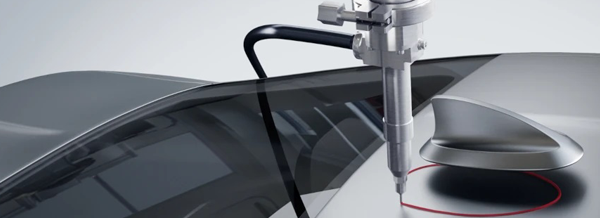
ViscoTec is a trusted supplier of high-precision dispensing systems engineered to meet the evolving needs of EV battery manufacturing. Its innovation-driven portfolio helps OEMs and Tier 1 suppliers solve key challenges in battery thermal management, systems integration, and safety—delivering repeatable, shear-gentle application of thermal gap fillers, potting compounds, sealants, and electrolytes across cells, modules, and packs.
With decades of experience in progressive cavity technology and the proprietary endless piston principle, viscotec enables volumetric, pulsation-free dosing—independent of viscosity—so highly filled, abrasive TIMs and 2K materials can be processed without separation or drip, supporting predictive thermal models and AI-driven quality control on the line.
Key Technologies Supporting EV Battery Systems:
Endless Piston Progressive-Cavity Dispensing
Volumetric, low-shear dosing for 1K/2K media—ideal for thermally conductive gap fillers, liquid gaskets, and potting where uniform heat paths and tight ΔT depend on consistent thickness and placement.
preeflow® eco-PEN (1K) & eco-DUO (2K)
Micro-to-macro precision for single- and two-component materials; viscosity-independent, pulsation-free output with programmable suck-back to prevent stringing—suited to TIMs, gels, and sealants in module-to-plate interfaces.
ViscoDuo® / ViscoDuo-VMP 2K Systems
Abrasive-ready two-component dispensers with heated/degassed feed, coated rotors, and static/dynamic mixing for thermally conductive potting and encapsulation—proven in automotive applications.
vipro-PUMP EV Electrolyte Filling
Pressure-regulated dispensing solution for round and prismatic hard-case cell electrolyte filling, enabling accurate, closed-loop volume control in formation lines.
Material Conditioning & Supply (ViscoMT / ViscoTreat)
Barrel-emptying, degassing, heating, and agitation systems that stabilize high-filler TIM rheology for consistent dispense rates and reduced voids—critical to reliable heat transfer.
E-Mobility Application Engineering
Process development for EV use cases—battery potting, gap-filler application, housing sealing—with on-site/tech-center support and inline analytics to tie dispense data to BMS thermal twins and AI inspection.

bdtronic
High-Throughput Dispensing & Heat Staking for EV Battery Thermal Management
bdtronic is a trusted supplier of high-throughput dispensing, heat staking, plasma, and impregnation technologies engineered to meet the evolving needs of EV battery manufacturing. Its innovation-driven portfolio helps OEMs and Tier 1 suppliers solve key challenges in battery thermal management, systems integration, and safety—enabling repeatable application of gap fillers/TIMs, reliable gasketing and sealing, and robust joining of battery module components.
With decades of process know-how and a broad machine range—from manual cells to fully automated lines with smartCORE controls—bdtronic delivers volumetric, low-shear material handling, in-line process monitoring, and cycle-time optimizations that support predictive thermal models and AI-ready quality strategies across cells, modules, and packs.
Key Technologies Supporting EV Battery Systems:
High-Volume Gap Filler Injection (TIMs)
Automated systems to dispense large quantities of thermal gap filler rapidly and void-free for efficient heat paths between modules and cold plates. White-paper guidance addresses cavity filling, air removal, and uniform conductivity.
smartCORE Controls + speedUP Motion
Fully automated dispensers with intelligent process control and optional speed-dependent dispensing to shorten cycles while maintaining dosing accuracy—foundational for consistent ΔT and pack-level thermal models.
Static & Dynamic Mixing, Potting & Vacuum Potting
Application-tailored mixing (1K/2K) and encapsulation methods for silicones, epoxies, and PUs to protect BMS/power electronics, eliminate air, and stabilize thermal performance under vibration and fast-charge loads.
CIPG Liquid Gasketing (with UV/Light Cure)
Collaborative solution with Hönle for CIPG sealing of module controllers—precise bead placement and fast curing to improve moisture/ingress protection and maintain thermal contact pressure.
Heat Staking for Battery Modules & Busbars
Conduction/convection hot-riveting to fix busbars, insulators, cooling plates, and frames across plastic-metal stacks; validated on flame-retardant PP compounds for battery enclosures.
Plasma Surface Activation
In-line pre-treatment to enhance wetting/adhesion of TIMs and sealants on low-energy plastics and coated metals, improving long-term thermal interface stability.
Process Analytics, MES & Needle Monitoring
Machine-integrated sensors (e.g., needle position/length checks), traceability, and capability indices (cmk) link dispense quality to digital twins and AI anomaly detection for predictive control.


SEKISUI
Thermal Interface Materials & Battery Pack Foams for the Next Generation of EV
SEKISUI is a trusted supplier of advanced thermal management materials engineered to meet the evolving needs of EV manufacturing. Its innovation-driven portfolio helps OEMs and Tier 1 suppliers solve key challenges in battery integration, lightweight construction, and safety—spanning dispensable gap fillers, thermally conductive adhesives, heat-release sheets, and lightweight foams that insulate, cushion, and stabilize packs under fast-charge heat loads.
With decades of polymer, filler-orientation, and roll-to-roll manufacturing expertise, SEKISUI delivers materials that combine high conductivity with flexibility and processability, supporting predictive thermal models and AI-assisted BMS strategies through stable, sensor-friendly interfaces and repeatable assembly.
Key Technologies Supporting EV Battery Systems:
CGW® Gap Fillers (Liquid-Dispense TIMs)
Two-part silicone gap fillers for module-to-cold-plate interfaces; cure-in-place for low thermal resistance and efficient heat spreading—an alternative to pads for automated lines.
CGW® Thermally Conductive Adhesives (TCAs)
Structural bonding to cooling plates with high thermal transfer and elongation to track cell swelling during fast charge/discharge—linking mechanical integrity with heat flow.
Heat-Release Sheets (Fin P-fin / N-fin; MANION™ Series)
Electrically insulating, high-conductivity sheets for power components and pack subassemblies; magnetic-field filler alignment enables thin, flexible heat spreaders.
Polyolefin Battery Foams (SEKISUI Alveo)
Lightweight compression pads and thermal insulation to manage cell expansion, damp vibration, and improve pack durability—enhancing safety and performance.
Thermal Greases & Pastes (GA / NT / NP)
High-performance pastes and silicone-free greases for electronics and busbar interfaces, tailored to reduce interfacial resistance and stabilize temperatures under load.

Joyson Safety Systems
Joyson Safety Systems – High-Voltage Battery Protection for the Next Generation of Electric Vehicles
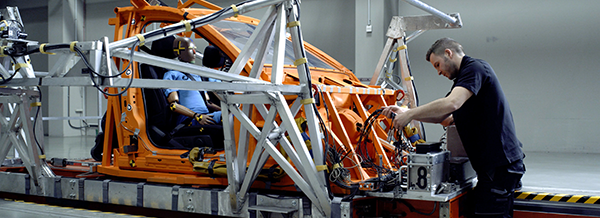
Joyson Safety Systems is a trusted supplier of safety-critical technologies engineered to meet the evolving needs of electric vehicle manufacturing. Its innovation-driven electrification portfolio helps OEMs and Tier 1 suppliers solve key challenges in battery safety, high-voltage isolation, and systems integration—especially where thermal incidents and crash events demand immediate electrical disconnection to protect the pack, the vehicle, and its occupants. Joyson’s standout Pyrotechnic Battery Disconnect™ (PBD) is designed to sever electric power from the high-voltage battery system when triggered by the vehicle safety ECU or battery management system.
With decades of automotive safety expertise, Joyson applies its system-level understanding of crash sensing, actuation, and vehicle protection to electrified platforms. Its battery interruption technology is positioned as an active, low-cost, lightweight solution that helps mitigate the increased risks associated with high-voltage and high-current EV systems—making it highly relevant to predictive thermal control strategies, AI-driven fault detection, and battery event management.
Key Technologies Supporting EV Battery Systems:
Pyrotechnic Battery Disconnect™ (PBD)
An active battery interruption device that irreversibly severs high-voltage, high-current battery connections when triggered by the electronic control unit or battery management system—critical for isolating faulted systems during crashes or severe battery events.
High-Voltage Safety Integration
Designed to address the added safety risks brought about by electrified vehicles, including electrocution hazards and high-amperage fault conditions in current and future EV and hybrid platforms.
BMS and ECU-Triggered Protection Logic
The PBD is specifically designed to interface with the vehicle safety ECU or battery management system, supporting rapid intervention strategies when abnormal thermal or electrical conditions are detected.
Lightweight, Cost-Effective Battery Interruption
Joyson positions the PBD as a low-cost, lightweight approach to battery safety, helping manufacturers improve protection without adding unnecessary system mass or complexity.
Award-Winning Electrification Safety Innovation
The technology has been recognized by Automotive News PACE and CLEPA Innovation Award programs, underscoring its relevance as a safety advancement for electrified vehicles.

Advantech International
Component Integration & Thermal Assemblies for the Next Generation of Electric Vehicles
Advantech International Inc. (ATI) is a sales, market-development, and distribution partner that connects world-class engineered component makers with EV OEMs and Tier 1s. Its portfolio and program management help teams solve challenges in battery thermal management, systems integration, lightweighting, and manufacturability—leveraging a global footprint to align technology, quality, and supply.
With decades of experience across metal forming, die casting, precision stamping, and automation, ATI delivers production-ready parts and assemblies for packs and power electronics. Dedicated “Thermal Management” offerings emphasize joining technology, thin-wall designs, material selection, and thermal mapping/simulation—supporting uniform temperatures, durable interfaces, and pack-level safety.
Key Technologies Supporting EV Battery Systems:
Thermal Management Components & Assemblies
Application-specific parts for modules, cold plates, and housings—with focus on thin-wall construction, material choices, and validated production routes.
Fiber-Laser Welding & Advanced Adhesive Bonding
High-integrity joining for mixed-material battery structures (e.g., aluminum trays, busbar covers), engineered for leak-tightness and repeatability.
High-Pressure Aluminum Die Casting & Precision Metal Forming
Lightweight, high-conductivity housings, brackets, and cooling hardware produced through HPDC, cold forming, CNC, and precision stamping—scalable for EV volumes.
Thermal Mapping & Simulation Support
Upfront feasibility and thermal mapping/simulation services aligned with supplier capabilities—de-risking heat paths and informing BMS/controls limits.
Program Management & Global Supply Enablement
Tier-1 style project management and logistics via ATI’s international network to accelerate sourcing, PPAP/validation, and series ramp.

Neural Concept
AI-Driven Thermal Design & Predictive Controls for the Next-Gen of EVs
Neural Concept is a trusted provider of Engineering AI software—centered on Neural Concept Shape (NCS)—built to meet the evolving needs of EV manufacturing. Its platform helps OEMs and Tier 1 suppliers solve core challenges in battery thermal management, predictive control, and systems integration by turning high-fidelity CAE + test data into real-time surrogate models that designers can query in seconds. Today, 70+ OEMs and Tier 1s use Neural Concept to accelerate thermal design decisions across cells, modules, packs, and vehicle thermal networks.
With multi-physics digital twins, optimization, and NVIDIA Omniverse–enabled workflows, Neural Concept connects electro-thermal behavior to cooling hardware, controls, and packaging. Use cases range from EV battery cooling optimization and heat exchanger design to vehicle thermal/aero trade studies—cutting simulation bottlenecks and feeding AI-ready BMS strategies with fast, accurate predictions. (Recent showcases cite 30% efficiency gains in novel EV battery cooling designs and order-of-magnitude speed-ups from hours to milliseconds.)
Key Technologies Supporting EV Battery Systems:
Neural Concept Shape (NCS)
3D deep-learning platform that learns from your CAD/CAE history (CFD/FEA/thermal) to deliver instant electro-thermal predictions and sensitivity maps—unlocking rapid design-space exploration for packs, cold plates, manifolds, and enclosures.
Battery Cooling & BTMS Optimization
Domain workflows for air/liquid and immersion concepts (cells→pack), linking flow/pressure drop, ΔT uniformity, and charge-rate heat flux to manufacturable geometries; supports predictive thermal control by exporting reduced-order models.
Thermal Runaway & Propagation Insight
AI surrogates and articles/tools that frame causes, early indicators, and mitigation strategies—enabling faster “what-if” studies for venting, spacing, and materials in concert with safety tests.
Heat Exchanger & Cold-Plate Generative Design
NCS accelerates topology/generative studies and optimizes heat-exchanger shapes using learned physics, guiding fin/channel geometry for pack and power-electronics cooling.
Real-Time / Omniverse Digital Twins
GPU-accelerated, Omniverse-integrated workflows bring interactive visualization and real-time surrogate co-simulation into engineering V&V—shortening iteration loops from weeks to days.
Adoption & Customer Results
Public stories include MAHLE (HVAC blower innovation) and GM (safety), plus an AAM Innovation Excellence Award—evidence of production-grade impact across automotive thermal programs.


Momentive
Silicone Thermal Materials for the Next Generation of Electric Vehicles
Momentive is a trusted supplier of silicone-based thermal solutions engineered to meet the evolving needs of EV battery manufacturing. Its e-mobility portfolio helps OEMs and Tier 1 suppliers solve core challenges in battery thermal management, systems integration, and safety—spanning thermal gap fillers and adhesives to potting gels, sealing materials, and non-halogenated flame retardants for battery housings.
With deep expertise in formulated silicones, Momentive delivers materials that combine high thermal conductivity (SilCool® TIMs spanning ~2.5–10 W/m·K) with low thermal resistance and reliability under vibration—key for fast-charge heat flux, predictive thermal models, and AI-driven BMS strategies that depend on stable, sensor-friendly interfaces.
Key Technologies Supporting EV Battery Systems:
SilCool® Thermally Conductive Gap Fillers
Dispensable, soft two-part silicones that fill uneven interfaces to improve heat flow from cells/modules to cold plates; portfolio covers ~2.5–10 W/m·K and has demonstrated strong performance in hot-vibration testing.
SilCool® Thermal Adhesives
High-conductivity bonding that replaces mechanical fasteners while maintaining a robust thermal path between heat sources and spreaders/plates—designed for high-volume processing.
SilCool® Potting & Gel Encapsulation
Flowable, thermally conductive silicones that conform to complex geometries, fill voids, and reduce interfacial resistance—supporting uniform temperature and component durability.
NEVSil™ & Silicone Sealing Adhesives/Elastomers
Pack-level sealing and gasketing solutions (RTV/CIPG/FIPG) formulated for harsh environments and UL 94 V-0–capable applications—supporting moisture/ingress control and consistent thermal contact pressure.
SFR100 Silicone Flame Retardant
Non-halogenated silicone additive for battery-housing polymers that helps deliver fire-safety performance without sacrificing toughness or causing corrosion—an option for lowering fire load at the enclosure level.
Momentive’s silicone innovations—SilCool® TIMs and adhesives, potting gels, NEVSil™ sealing solutions, and SFR100—are enabling lighter, cooler, and safer EVs built for intelligent, predictive thermal control.


Convergent Science
CFD, Digital Twins & Predictive Controls for the Next Generation of Electric Vehicles
Convergent Science, developer of CONVERGE CFD, is a trusted simulation partner for EV engineering. Its innovation-driven platform helps OEMs and Tier 1 suppliers solve key challenges in battery thermal management, systems integration, and safety—linking cell electro-thermal behaviour to module/pack cooling, venting, and vehicle-level thermal networks.
With truly autonomous meshing, advanced physical models, and HPC scaling, CONVERGE accelerates design cycles and reduces test burden—enabling predictive thermal controls, AI-assisted calibration, and data-backed safety cases. Purpose-built workflows cover conjugate heat transfer (CHT) for battery cooling and thermal runaway/propagation modelling to de-risk fast charge and high-load scenarios.
Key Technologies Supporting EV Battery Systems:
Conjugate Heat Transfer (CHT) for Battery Cooling
End-to-end CHT modelling of cold plates, refrigerant loops and structures to optimise ΔT, pressure drop and heat-rejection during charge/discharge.
Thermal Runaway & Propagation Simulation
Physics-based tools to trigger runaway events, predict cell-to-cell propagation, and assess venting/mitigation strategies—applied on OEM programs to cut prototyping cost and time.
eMobility Workflows & CHT Acceleration
Battery, motor and power-electronics thermal modelling with solver features that speed up CHT simulations for program throughput.
Autonomous Meshing for Complex Packs
Grid generation bottlenecks removed; robust meshing handles intricate channels, manifolds and busbars for reliable thermal predictions early in design.
Digital Twins, Reduced-Order & Real-Time Models
Export reduced-order plant models from high-fidelity CFD to support MiL/SiL/HiL and predictive thermal control in the BMS/VCU stack. (Industry research shows ROMs enable real-time forecasts for control.)
AI/Optimization & HPC at Scale
Machine-learning-assisted optimisation and DOE workflows, backed by HPC scaling, to explore thousands of designs and converge faster on safe, efficient thermal architectures.


Kingfa
Advanced Polymers & Composites for the Next Generation of Electric Vehicles
Kingfa is a trusted supplier of engineered thermoplastics and composites designed to meet the evolving needs of EV manufacturing. Its innovation-driven materials portfolio helps OEMs and Tier 1 suppliers solve key challenges in EV battery integration, lightweight construction, and safety—delivering flame-retardant, high-temperature, and dimensionally stable grades for brackets, cases, covers, and power-electronics housings.
With decades of compounding expertise across PBT, PC, PPE/PP blends, PA, LCP, and specialty alloys, Kingfa enables thin-wall designs with UL94 V-0 performance, arc resistance, and solvent resistance—attributes that support pack durability, thermal uniformity, and robust systems integration.
Key Technologies Supporting EV Battery Systems:
Flame-Retardant PBT (UL94 V-0)Grades for battery modules, connectors, and high-voltage components offering strong electrical properties, chemical resistance, and thin-wall processability—well suited to thermally stressed environments.
PPE-Based Battery Bases & Cases
High-temperature, impact-resistant, halogen-free V-0 PPE materials (e.g., PPE-1311) for lithium-battery base shells—combining heat resistance with electrical insulation and dimensional stability.
Battery Brackets & Structural Plastics
Application-specific PP/PPE/PC grades for lithium-battery brackets and pack structures, balancing lightweighting with stiffness and solvent resistance to maintain alignment and thermal interface pressure.
High-Temp Connectors (LCP / PA66)
LCP and PA66 families (e.g., Vicryst® LCP) achieving UL94 V-0 at 0.1 mm and low warpage for HV connectors and busbar carriers—supporting reliable current paths and heat-affected zones.
EV Battery Pack Cases & Covers
Formulations targeting arc resistance and V-0 flammability for external housings and covers to enhance enclosure safety under fault conditions.
Sustainable FR & PCR Compounds
Tailored flame-retardant PCR polyamides and PPE blends aimed at EV thermal environments—supporting circularity without compromising fire performance.


Wacker Chemical Corporation
Silicone Thermal Materials & Fire Protection for the Next-Gen of EV
WACKER is a trusted supplier of silicone-based solutions engineered to meet the evolving needs of EV manufacturing. Its innovation-driven portfolio helps OEMs and Tier 1 suppliers solve key challenges in battery thermal management, systems integration, and safety—spanning liquid-dispensed gap fillers, thermally conductive encapsulants and adhesives, passive fire-protection materials, and sealing technologies for cells, modules, packs, and power electronics.
With decades of formulation expertise and a growing North American footprint—including an Innovation Center and regional HQ in Ann Arbor—WACKER delivers reliable heat paths and safety layers that support fast charging, temperature uniformity, and propagation-mitigation strategies. These materials feed predictive thermal models and AI-ready BMS logic by providing stable, repeatable thermal interfaces and verifiable abuse-test performance.
Key Technologies Supporting EV Battery Systems:
SEMICOSIL® 9649 TC Gap Filler
Two-component, electrically insulating silicone gap filler (~4 W/m·K) engineered for high thermal stress in power electronics and battery interfaces; cures to a repairable elastomer that bonds components to cooling elements for efficient heat dissipation.
ELASTOSIL® RT Thermally Conductive Encapsulants (e.g., RT 675, RT 7331 TC)
Flowable, 2K silicone systems that self-level or pot to eliminate air gaps, lower interfacial resistance, and stabilize temperatures in modules, BMS, and inverters—available in multiple viscosities and cure profiles.
Battery Safety Potting (ELASTOSIL® CM 181 / CM 185)
Silicone compounds highlighted for preventing fire spread during thermal runaway, adding a passive protection layer around cells and subassemblies in EV packs.
Fire-Protective Composites & Coatings (Silicone Resin Technologies)
Emerging carbon-fiber/silicone-resin composites and coating concepts for battery enclosures to enhance thermal shielding and delay heat/flame penetration.
Silicone TIM Portfolio (ELASTOSIL® / SEMICOSIL® Families)
Broad TIM range—gap fillers, pads, and encapsulants—covering varied conductivities and cure speeds to match pack architectures and production takt times.

Arnold Fastening Systems
Precision Joining for the Next Generation of EVs
Arnold Fastening Systems (ARNOLD UMFORMTECHNIK) is a trusted supplier of engineered fasteners and assemblies designed to meet the evolving needs of EV manufacturing. Its innovation-driven portfolio helps OEMs and Tier 1 suppliers solve key challenges in EV battery integration, lightweight construction, sealing, and structural safety—backed by application engineering, in-house testing, and series production under the BlueFastening Systems umbrella.
With decades of expertise in cold forming and system integration, ARNOLD delivers fasteners and functional parts that create high-strength, durable joints in thin, mixed-material structures—critical for today’s battery trays, cooling plates, covers, and underbody protection. The company supports programs from concept through validation for e-mobility battery assemblies.
Key Technologies Supporting EV Battery Systems:
Flowform® & Flowform® Plus (Flow-hole & Thread-forming Screws)
Single-sided, automation-ready joining of thin and mixed metals without pre-drilling; enables high clamp loads with short cycles—ideal for battery trays, covers, and structural frames.
Powertite® Thread-Tapping Screws (Metal)
High load-bearing, reliable thread-tapping in metals (≈20% higher capacity vs. conventional TRILOBULAR® tapping) to maintain joint integrity under thermal/vibration loads.
RIVTEX® Self-Piercing Nuts
Heat-free, corrosion-resistant pierce nuts that protect threads and avoid heat-affected zones—useful near cooling channels and seal interfaces in battery structures.
Conform® Cold-Formed Functional Parts
Project-specific multi-functional cold-formed parts for EV/lightweight applications (e.g., spacers, studs, inserts) that consolidate parts and improve packaging around thermal hardware.
Sealing-Focused Fastening & Validation
Engineering methods and test regimes tuned to lifetime sealing performance for new drive concepts—supporting pack ingress protection and liquid-cooling reliability.
E-Mobility Battery Pack Application Support
End-to-end application engineering for battery packs, from design to lab testing and series ramp, with solution maps for where each fastener type fits within the pack.


Fictiv
Digital Manufacturing & Supply Chain Solutions for the Next Generation of Electric Vehicles
Fictiv is a trusted digital manufacturing partner helping OEMs and Tier 1 suppliers bring EV battery and thermal-management hardware from prototype to production. Its innovation-driven platform supports key challenges in battery systems integration, lightweight construction, and manufacturability by connecting engineering teams to on-demand CNC machining, injection molding, sheet metal fabrication, 3D printing, and production sourcing through a streamlined digital supply chain.
With expertise spanning prototype, EVT, DVT, PVT, and production, Fictiv helps customers accelerate the development of battery trays, thermal shields, module enclosures, cooling-adjacent structures, and other EV components. Its approach is especially valuable for battery programs where rapid design iteration, material selection, and supply-chain agility are critical to validating thermal performance, safety, and cost targets.
Key Technologies Supporting EV Battery Systems:
Digital Manufacturing Ecosystem
A unified sourcing and manufacturing platform that supports rapid prototyping through production, helping teams move battery and thermal components faster from CAD to qualified hardware.
Rapid Prototyping for EV Hardware
3D printing, urethane casting, CNC machining, and quick-turn fabrication for early-stage validation of battery enclosures, mounts, thermal interfaces, and packaging layouts before full tooling investment.
Sheet Metal & Laser-Cut Battery Structures
Manufacturing support for battery trays, thermal shields, and lightweight chassis or enclosure components, enabling precise fabrication with materials such as aluminum and high-strength steel.
Injection Molding & DFM Support
Design-for-manufacturing feedback and molding expertise that help reduce cost and accelerate timelines for battery-adjacent plastic components, housings, and structural integration parts.
Prototype-to-Production Supply Chain Management
Support for scaling from pilot builds to series production with attention to component availability, lead times, assembly planning, and quality control—critical for battery packs and ESS systems.


M4 Engineering
Simulation, Optimization & Prototyping for Next-Gen EV Battery Thermal Management
M4 Engineering is an engineering, prototyping, and testing partner that helps OEMs and Tier-1s design lighter, safer EV battery systems. Through high-fidelity simulation, digital twins, structural optimization, and hands-on validation, M4 tackles heat, weight, and manufacturability— from cells and modules to pack structures and power electronics.
A 2025 strategic partnership with HeatSync expands M4’s capability set across battery and electronics thermal management—combining advanced thermal modeling with practical test and prototyping workflows for faster, more reliable integration.
Key Technologies Supporting EV Battery Systems:
Battery & Electronics Thermal Simulation (Digital Twin)
High-fidelity thermal models and digital-twin workflows to size cooling hardware, manage hotspots, and assess thermal propagation—paired with rapid test loops to de-risk designs early.
Multidisciplinary Design Optimization (MDO)
Integrated aero/structural/thermal optimization to balance pack performance, mass, stiffness, and cost under fast-charge heat loads and crash/abuse constraints.
Topology & Weight Optimization
Automated topology/weight-reduction studies for cold plates, manifolds, module carriers, and pack structures—cutting material while preserving thermal/structural targets.
Composite & Advanced Materials Engineering
Design, analysis, and training for composite structures—enabling lightweight battery enclosures and module frames with manufacturable layups and joining strategies.
Prototyping & Test (Long Beach Advanced Prototyping & Test Center)
Hardware-in-the-loop thermal experiments, electronics/power device testing, and build support to validate models, materials, and interfaces before scaling.
Industry Partnerships & Scale-Up Support
Co-development with HeatSync (battery/electronics thermal), plus broader collaborations to accelerate design cycles with CFD/HPC and manufacturing know-how.
From lighter, mass-optimized packs and tighter temperature uniformity across modules to accelerated concept-to-prototype cycles, M4 Engineering delivers simulation-led design, advanced optimization, and hands-on validation for EV battery thermal management and systems integration.